Category Archives: Japan

Cute Fashion and the Fashionably Cute

Although they are very interested in looks and fashion and branded goods, the Japanese don’t seem to have an interest in beauty pageants.

Instead they’ve found a way to connect annoying cuteness with fashion and high-tech consumerism in something called Tokyo Girls Collection.

Tokyo Girls Collection is a fashion show and concert held in a large arena and is open to the public as well as journalists and buyers for stores. The models usually have a girl next door appeal and many are singers and actresses representing fashion companies and magazines and not professional runway models. Most appear to have eaten at least once in the last year.

The thing that makes the show interesting, even as it’s featured endlessly on the news for two days, is not only the spectacle of it but the shocking ordinariness of it all. This isn’t a Paris fashion show steeped in pomposity, false sophistication and the tragically trendy where the clothes being shown will never actually be worn–the fashion equivalent of concept cars–it’s ordinary looking people (albeit annoyingly cute ordinary people) wearing clothes that can be purchased at the show.

In fact, part of the spectacle is the droves of young women trying to watch the show whilst simultaneously working their smartphones to try to buy the clothes and accessories they’re seeing on the runway. In some cases the clothes can be picked up at the show; in other cases they are shipped to the buyer. Every year the news features a handful of young women who’ve both succeeded and failed to acquire what they were hoping to acquire. There are also interviews with women who’ve traveled several hours to be there.

The show has been popular enough over the past 10 years to spawn several rival shows–including a Tokyo Boys Collection–and has even been sent off to Beijing and the USA. It’s also grown in size and spectacle with more bands and more brands.

Eventually, I predict, it will simply become a concert and people will forget about the clothes.
The Last Train and the First Train

One of the decisions you have to make when you live near Tokyo is how late you want to stay out when you’re spending a night out on the town. Your choices are simple:

1) Go home early.
2) Stay out all night.

You can not stay out “later than usual”. If you try to do this, you will stay out all night.

This is because Tokyo’s train system begins shutting down between 11 and midnight. If you have to catch two or more trains, you have to be aware of the last train on each line. The last train from the closest station may depart at 12:45 a.m. but the last train you can take to get home may leave at 12:30 a.m.

If you miss one key train you will miss all of them and may find yourself taking a taxi home or back to the bar.This makes for odd schedules. The Yahoo Transit site tells me that 12:45 a.m. is the last train from my Ikebukuro heading my direction. It stops about half way and then the instructions tell me the next connection leaves at 4:59 a.m.

This also makes for odd evenings.

I remember meeting a friend from high school and university who’d been living in Japan since the 80’s. I hadn’t seen him in decades, but after only a few drinks and some reminiscing, I had to leave for home at 10 because the bar was in a strange location and I had four trains to catch. It was either “Sorry but I turn into a pumpkin at 10:00”  or I had to say “I know I haven’t seen you since the Reagan administration but can I crash at your place?” (It might have worked with him; it doesn’t work with ex-girlfriends, though.)

The other choice is to stay out all night. The first trains start around 5:00 a.m.

What typically happens around last train time is the working people, the Cinderellas, rush to the train to get home or their wives will throw pumpkins at them (something like that). To reach the train they have to human slalom around the college students and party animals (Vampires) who have the energy to stay out all night and are just heading to the clubs.

The last train is typically one of the worst rides you can take. It’s crowded and full of drunk people. It’s one of the few times I feel nervous riding the train.

If you’re not interested in playing Vampire but don’t have any one who will throw pumpkins at you the next day, there are other options, but they are expensive. There are capsule hotels and, if you can find one that takes singles, Love Hotels. They are safer than the last train and the prices are usually comparable to taking a taxi home.

In fact, I suspect it’s the hotel and taxi industry that lobby to keep Japan Rail and the private train lines from operating all night.


Slowly at First Then Faster and Faster

I’m a good enough dad that I’ll go to a concert even when I’m tired. I’m a good enough photographer that I’ll keep the camera straight when I’m asleep. Mostly.

Today was a special concert for our oldest’s brass band club. It was the final performance for all the 3rd year (9th grade members) and took place in a large auditorium with professional lighting.

As always, it was a good performance but there were two problems:

1) last night was the final (probably) farewell party for a departing colleague and I didn’t get home until the next to last train. (I actually wrote yesterday’s post early because I knew I wouldn’t be home until late). (More on “last trains” and “first trains” in another post.)

2) The band front-loaded all the serious slow songs. The songs were so serious the students actually wore their uniforms and sat seriously.

I was using a monopod and had situated it with one hand more or less strapped to it as an anchor and the other holding it straight. Several times during the performance I caught myself waking up but subsequent check of the video showed little drift. Luckily I didn’t experience a Hypnic Jerk (which would make a great band name) or the film might have been more exciting.

Only once did I catch myself falling to the side, but on video it looks more like a clumsy adjustment.

After the five slow songs and, as it turned out, the accompanying nap, there was a ten minute intermission.

During that break the band changed to jeans and t-shirts and came out for the real performance: theme songs from movies and a couple of the girls acting like Ariel from Little Mermaid (who suddenly went blonde) and another girl dressed like Captain Jack Sparrow. We then listened to “Under the Sea” and the theme from Pirates of the Caribbean and medleys of various Studio Ghibli tunes.

During the third phase (Japan Pop Tunes) the graduating 9th graders put on funny hats and sunglasses and tried to induce the audience to join in a popular dance to the song “Gera Gera Po (Yokai Watch)”. The effect was something like this. (You don’t need to understand Japanese; it might be worth watching a minute or two.)

At some point there was the obligatory random standing, but at times there was also actual dancing, which is one step away from marching, but not as annoying.

It ended with one parent encouraging the audience to shout “Thank you” to the graduates, which led to lots of tears.

Next year, I’ll have to go again for our oldest’s graduation performance. I’ll try to be more awake then, but I make no promises.


There’s No Such Thing as a Free Beer

One of the things I think a lot of people don’t get about government goodies is that although something doesn’t have a price, it always has a cost. You only think you’re getting it for free. This is also true of free beer.

One of the advantages of being a foreigner in Japan is that, even in this area, people will invite you to their blue tarps during Hanami and offer you a beer. If you’re lucky the only cost is 20 questions and a chance to practice your Japanese while they practice their English. Then, if you’re smart, you run to a beer machine or a convenience store and replace the beer you just drank after a short “oh, you didn’t have to do that” ritual.

If you’re not lucky, or an introvert not good at making long term conversation in another language and/or not good at making graceful exits, you may pay a higher cost when you end up trapped. On two occasions, I’ve been trapped. Both actually happened in the same day.

First, when I was still in Nou-machi, the town festival (more on that in another post) fell on a Saturday which meant a lot of people were suddenly able to attend. As soon as I arrived, I ran into my former boss who had secured a prime location. He immediately ordered me to sit down and drink. I stayed a while and every time I was about to try to leave I was handed another beer. Eventually, other friends arrived from other towns and I was able to exit.

(For the record: I probably out-stayed my welcome by quite a long time but I’ve never been good at reading “your time is up, get the hell out” signals in any language.)

After that I pointed my friends in the right direction for beer and refreshments and then got ordered to sit by a group of people I knew. They also started handing me beer. I ended up stuck there for a while until I managed to escape.

Keep in mind, part of the reason I liked attending the festival was it gave me a chance to play with camera gear and take lots of pictures. Being trapped, even with free beer means I’m stuck in one location and can’t just break out a tripod and camera when I’m supposed to be being sociable. It also means I can’t enjoy the food you have to pay for. Most of the free beer entrapments provide free snacks, but I’d rather head to the food stands.

The stuff there has a price but little cost.

I rather be here. The food stands at Takada Park in Joetsu. It's famous for its night Hanami.

I rather be here. The food stands at Takada Park in Joetsu. It’s famous for its night Hanami.

Viewing Flowers Through Beer-Colored Glasses

A lot of people are about to celebrate spring by getting really drunk.

The arrival of spring in Japan means the cherry blossom trees are about to bloom and the Japanese will get drunk and stupid for at least one night during Hanami, or the flower viewing festival.

I think this festival is so important because it marks the first day the Japanese can have a party outside without freezing. That said, it is still kind of an odd festival.

The truth is the plum blossoms have been blooming for a while and they are much more impressive than the cherry blossoms, most of which are old and are more of a pale pink that a vibrant pink. However, most years the weather is too cold for people to properly enjoy partying outside, especially when it’s only plum blossoms.

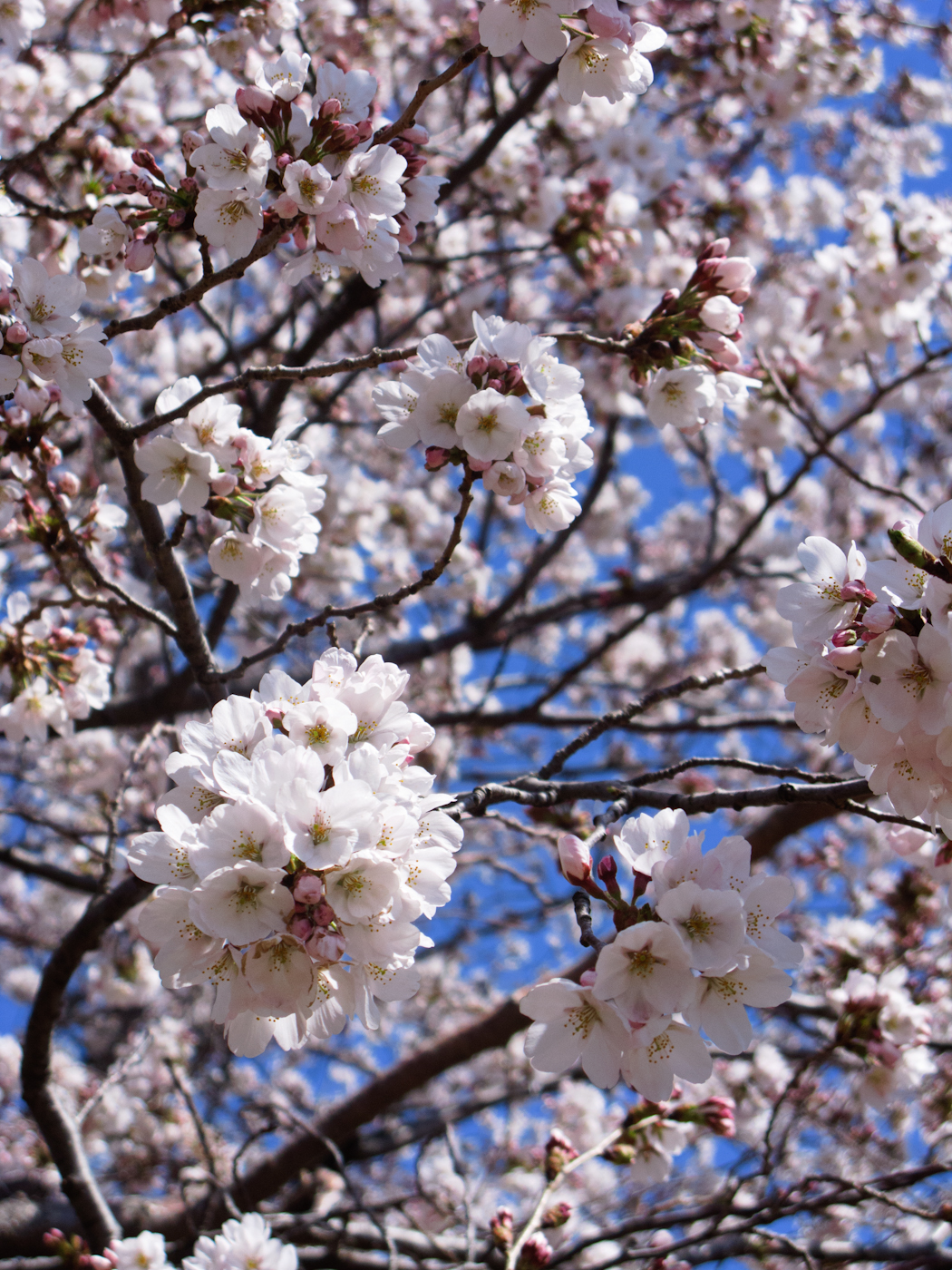
This is what it looks like from under the tree.

Cherry blossoms from a couple years ago. Cool, but kind of pale.

Also, a lot of events happen at once at the end of March: graduations, teacher transfers, company employee transfers and the end of the fiscal year. Everyone’s tired, has cabin fever and is ready to party.

This also leads to a form of competition. Young employees are sent to the most popular party spots (Ueno Park, Shinjuku park and Naka-Meguro) and told to claim a plot of land for their company. The weapon of choice for this claim is a blue tarp. The young employees then work shifts, including spending the night in the park, to keep the prime spot of land claimed.

Some people camp out for a week at time and neither rain nor snow nor sleet nor rival companies will keep them from their appointed plot. (Something like that.)

At the same time the Japanese news is filled with official forecasts of when the leaves will be in full bloom. The forecasts include color charts depicting the current level of bloom and the full bloom day in various cities. Forecasters can get in trouble if they are wrong.

Reporters are sent out the parks to interview earlier partiers and commiserate with the campers as the young reporters probably were the campers the year before.

Once the party starts, it’s basically a 24 hour drunken picnic. Thousands of people assemble on the tarps and thousands more walk around with drinks in hand. Places like Naka-Meguro (a river walk) are so crowded all you can do is walk (don’t stop, it’s too dangerous to stop) and photographers will nearly come to blows trying to get the best angles.

At that point the tabloid magazines send out their reporters and photographers to capture the revelry and as much debauchery as possible. Back after I moved to Tokyo, a group of us managed to find a spot in Ueno Park along with tens of thousands of other people. We were then invited to join another group.

At some point a tabloid photographer started stalking us, mostly to get pictures of drunken foreigners and, especially drunken foreign women. That tabloid shut down soon after that party, but there might accidentally be a picture of me out there.

Luckily, it will be pretty boring.

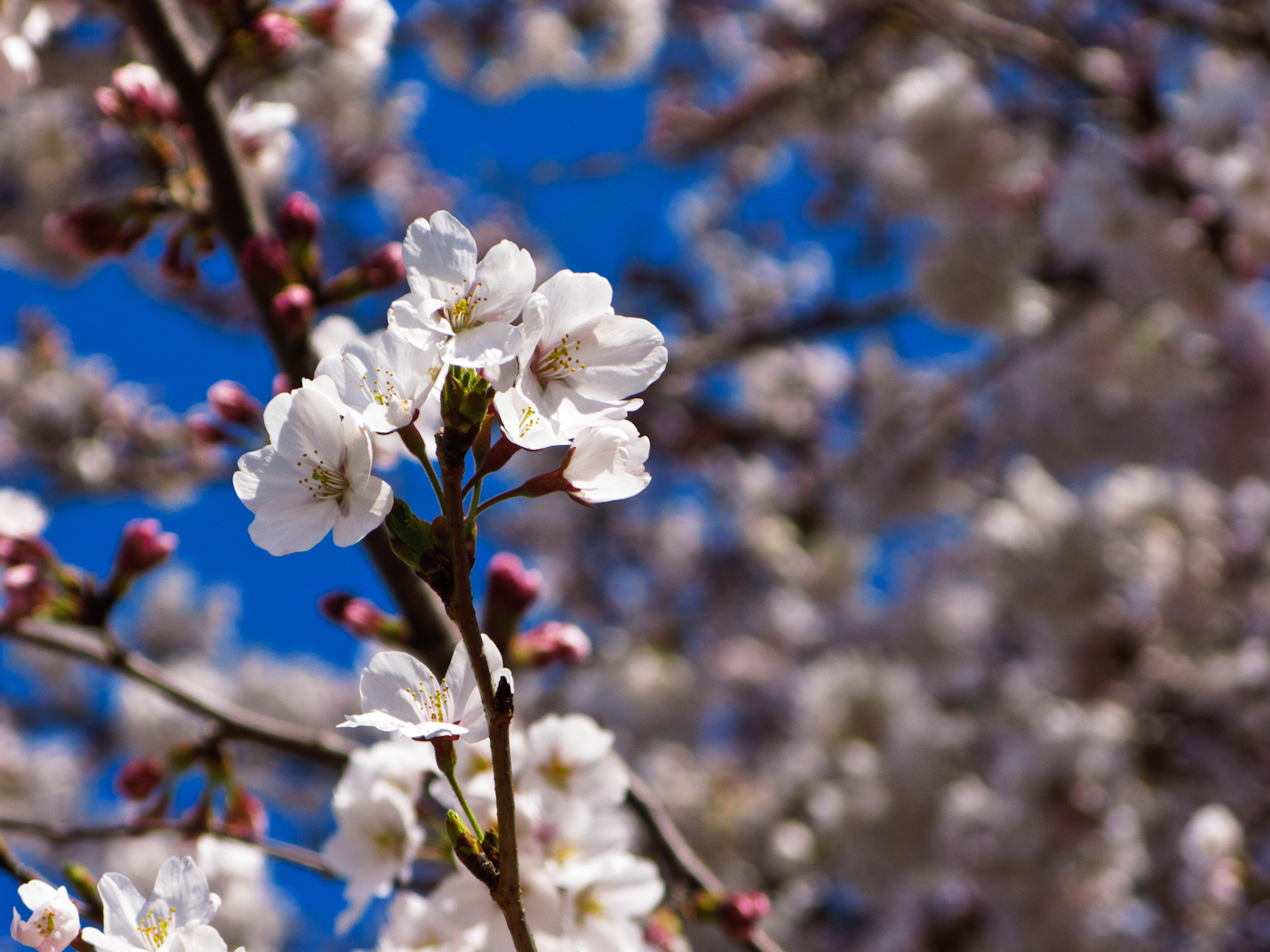
More cherry blossoms. Still kind of pale, though.

More cherry blossoms. Still kind of pale, though.

The Endless Tournament of the Not Funny

One thing I don’t get about Japan is it’s unceasing love for comedians. Perhaps it stems from a lifestyle that’s so work-oriented it’s driving people to suicide. In that environment, some humor must be a nice thing.

That part I get. What I don’t get is their love of unfunny comedians. For the most part Japanese humor is old vaudeville slapstick with two comedians, one the straightman and one the stooge. The stooge does something dumb and the straightman responds by slapping him on the head. In fact, it’s common for the host of a comedy show, if he’s a comedian to hit his comedian guests. They even do this to women which can be rather disturbing to someone from the west. (More on that in another post.)

There’s also a reliance on goofy gestures and pratfalls. Most comedy duos also have a signature gesture they use to announce the end of a joke as most of the audience isn’t laughing and need a cue to commence polite golf claps and polite, er, golf laughs.

Soon after I got to Japan, I saw a TV show where several comedians played a form of baseball. Nine members of a family were arranged in a tic-tac-toe grid. The members’ ages ranged from elementary school kids to retirees and included at least one teenager. Each comedian was given a set number of “pitches” (i.e. jokes) to make all nine members of the family laugh.

I wanted to practice my Japanese so I thought I’d watch and see if they could make me laugh.

Spoiler: they couldn’t.

Almost every comedian went up and started making stupid gestures or simply acting stupid. The elementary school kids laughed right away but everyone else kind of seemed sad for the comedians. Finally, Takashi Okumara of the Japanese comedy duo Ninety-nine got the chance to “pitch”. After a few failed gestures and stupid puns, he announced something called “Bruce Lee DJ”. He made a big show of balancing imaginary headphones and putting on a record. Then as he started to scratch the record he started making Bruce Lee kung fu chicken noises and kung fu gestures.

I’m not sure anyone else laughed, but I did. It was an actual joke requiring set up, timing and delivery. It also required a bit of knowledge about Bruce Lee.

It may not have been that funny, but by that point I was hoping for anything resembling a joke.

Trains in a Museum With a Bit of Tongue

I had a student who was so interested in trains that he’d memorized the gestures and phrases the station-masters used to send off trains. He also knew the announcements of every station on his route. When I gave out a map of the Tokyo railway system, he immediately knew which parts were out of date.

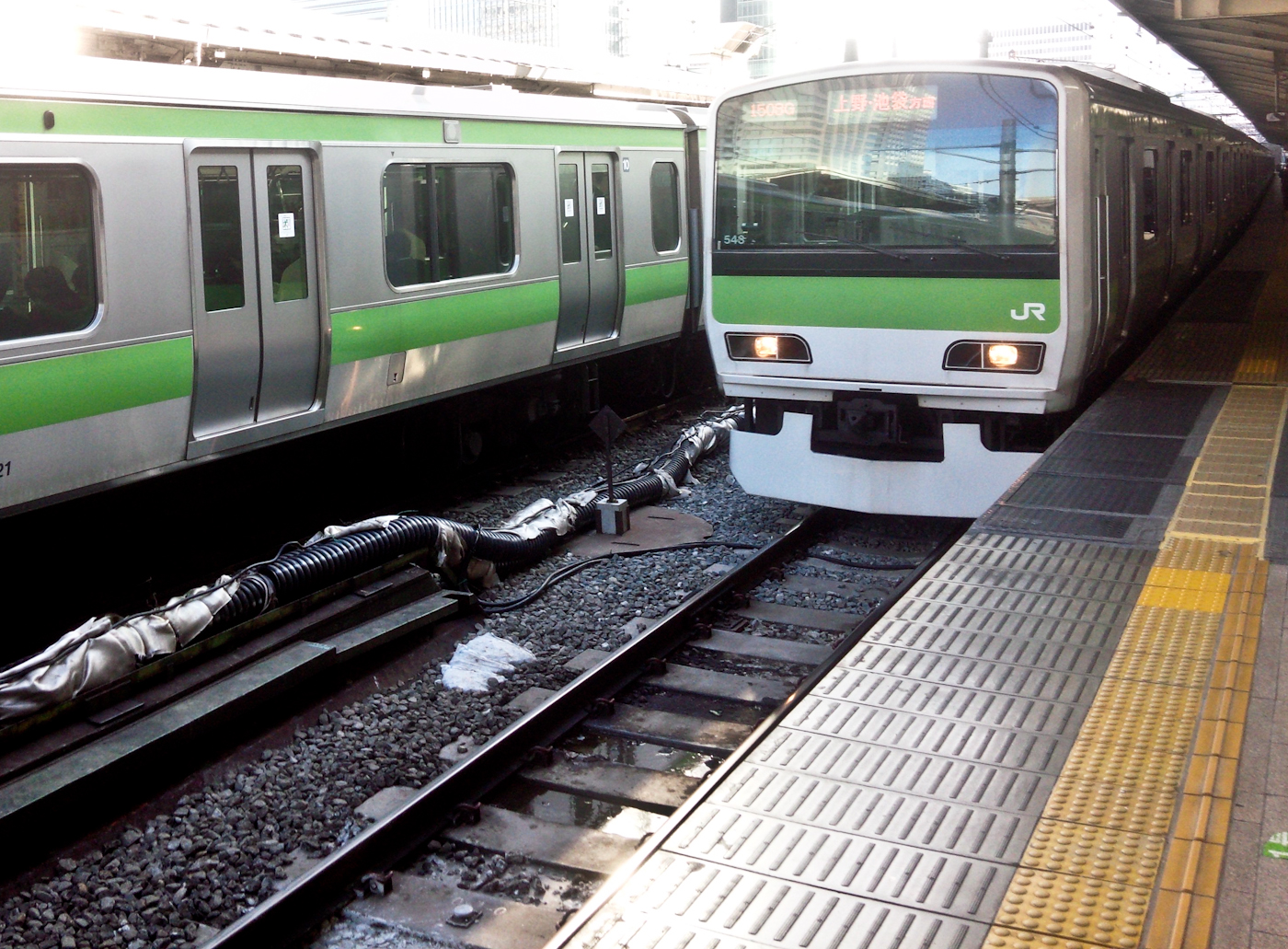
Oddly, for Japan, this is relatively normal behavior. At every station it’s normal to see several people taking pictures of the approaching trains and discussing how the trains look even if they are not that interesting:

A Yamanote Line train approaches. This is the kind of pictures train nerds take.

A Yamanote Line train approaches. This is the kind of pictures train nerds take. Mine is merely illustrative not nerdy.

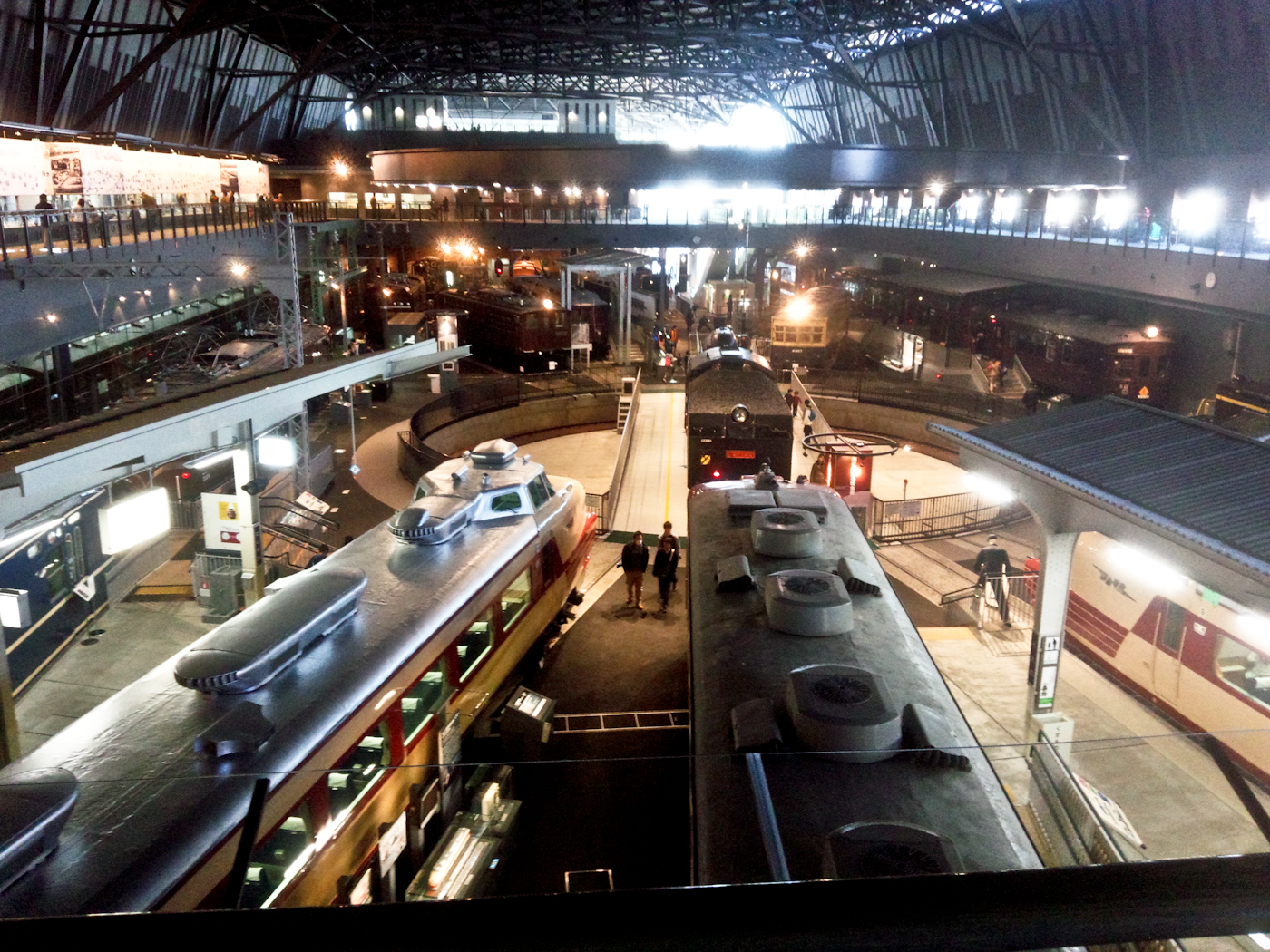
It was therefore inevitable that a bunch of old trains would be assembled at a museum. What makes The Railway Museum very Japanese is the trains are all kept inside a temperature controlled building the size of an aircraft hangar.

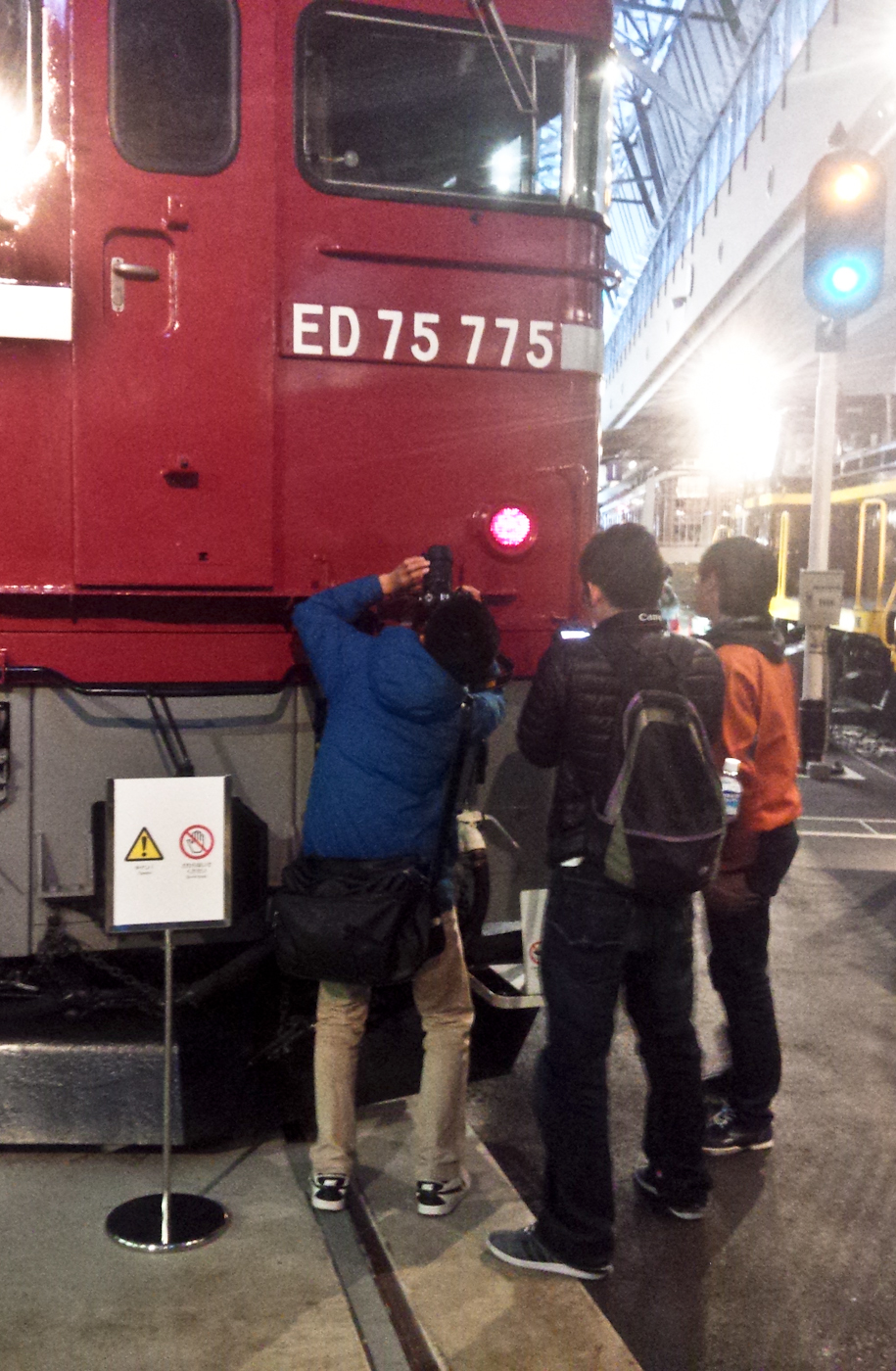
Our youngest and I rushed off to this museum today and both of us were impressed. Because it was a school day, it wasn’t that crowded but there was a good collection of nerds present taking pictures of every detail of every train.

NERDS!

NERDS!

The museum is well laid out with all the trains and cars and exhibits in rough concentric circles. There’s a good mix of old and not quite as old trains and lots of displays about the new trains. Visitors could go inside most trains and experience the difference between third class, second class and first class (the latter being the one we could only look at not actually experience).

There were also several cars from the old Imperial trains which seemed fairly posh, at least from behind the floor to ceiling glass walls. Staircases led under some trains so nerds could photograph the undercarriage.

The rail yard part of the museum.

The rail yard part of the museum.

The rail yard from the other side. The Imperial trains are behind the glass to the right on the ground floor.

The rail yard from the other side. The Imperial trains are behind the glass to the right on the ground floor.

My biggest complaint about the rail yard section was that none of the drivers’ cabins were open to the public. It would have been cool to see what the world looks like from the point of view of the drivers.

On the other end of the museum is a learning center with a huge train diorama and a section where kids can play with various train related items involving physics and lights. Train driving simulators are available for those willing to stand in line. There is also a small train ride for those willing to stand in a longer line.

The final fun part is that visitors can buy boxed lunches (ekiben) from various stations around Japan and eat them on a train car. Our youngest had chicken with a side of ketchup rice. I had a Sendai specialty: breaded, deep-fried beef tongue sandwich.

Entry to the museum is 1,000 yen for adults, 500 yen for students ($8.38 and $4.19). The chicken and tongue are extra.


Making Your Time Thing is Not a Waste of Time

Any close analysis of it will tell you that I think too much about calendars.

I’ve written before how, after years of trying to find the perfect calendar, I gave up and started constructing my own. There is a certain feeling of accomplishment that you’re carrying something you made. The feeling lasts until you realize how much time you wasted making something that was supposed to keep you from wasting time.

That feeling goes away quickly, though, I’ve found.

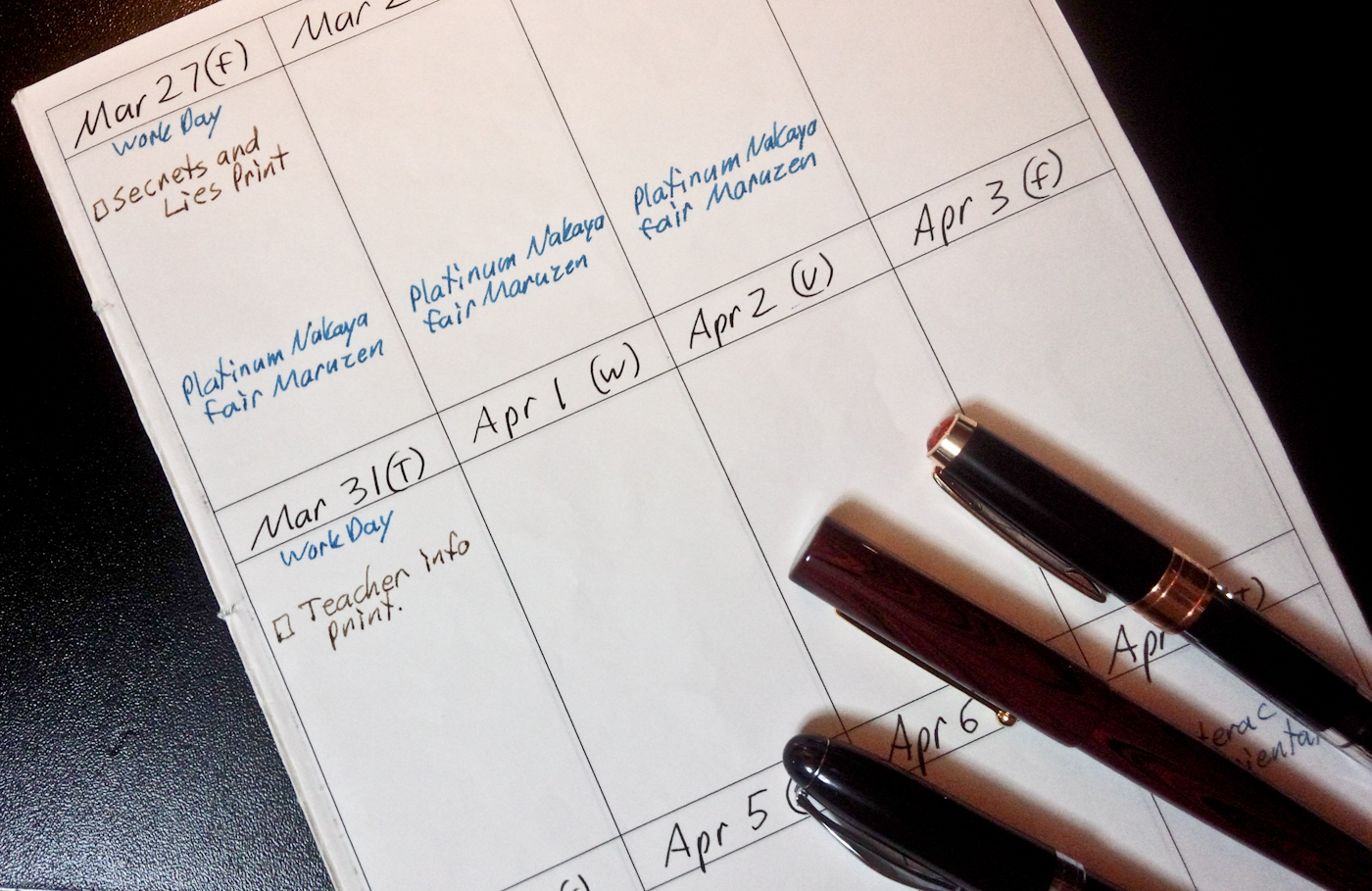
My main problem is that I inevitably find flaws even with the calendars I made myself. For the past few years I’ve used an A4 sized calendar made from A3 paper. I printed a 12 day pattern on both sides then folded and sewed them together. Being a masochist at heart, apparently, I wrote all the dates in by hand. A smart person would learn how to let the computer enter all the dates, but if you’ve been reading this blog for any length of time, well, yeah, you know how smart I actually am.

Next week's schedule. Guess where I'll be on or around the weekend.

Next week’s schedule on this year’s calendar. Guess where I’ll be on or around the 27th.

I like the 12 day format because I can write a lot in each day, but can’t write too much. I also like that I can get a full year in only seven or eight pages making it easy to carry.

The problem is that with the old system I didn’t have any overview of the year. I found myself turning the page and suddenly remembering the special event listed the very next day. Also, because the calendars are center bound and I just fold a page over, flipping and unfolding to find a past date can look a lot like black belt level origami (knowing Japan, that almost certainly exists).

What I’ve done this year is put 12 days on one page and left the back side blank. I’ve added full year calendar at the front and a monthly special events calendar behind that. I’ve then added card stock covers and left-bound it all with staples and gaffer’s tape. It makes the book thicker, but I suspect it will be a lot easier to use. I can also use facing pages for notes and random scribbles.

This format also gives me covers to scribble and doodle on.

I’ve backed it all up on computer (Google Calendar) so I can keep track of things when I’m not carrying the big book.

At least that’s how it all works this year. Next year, I’ll probably try something different.

Have fun now, because your days are probably numbered. No pun intended.

Have fun now, because your days are probably numbered. No pun intended.

Free Whiskey and a lot of Whine

On two occasions when I lived in Niigata, I was given bottles of whiskey. In only one case did I actually say thank you. In both cases I tried to avoid drinking the whiskey.

The first time I was given a bottle of whiskey was at a Bonenkai. My then boss knew I liked whiskey and presented me a bottle at the beginning of the party. It was a decent brand and was actually James Bond approved. (It’s the second bottle down on this site.) I said thanks and tried to set the bottle to the side.

Unfortunately, it became clear that I’d have to drink the whiskey rather than beer. The attitude was You like whiskey. You have always liked whiskey. You have never liked beer. You will like the one and hate the other. Ye cannot serve whiskey and mammon. (Something like that.) This would have been fine except for the Japanese party tradition that you never pour your own drink. Instead, someone comes up to you, forces you to finish your drink and pours you another.

With beer this is not a problem as the glasses are small. With whiskey it’s like drinking a triple shot and then being poured another. I tried sipping my way through but was forced to drink down the glass at least four times. When I was able to fly and crawl across the ceiling, I finally convinced them that I needed beer.

The second time happened on a ski trip where I was having one of my brain lock meltdowns. I’d been crashed into by not one, but two soulless snowboarders (but I repeat myself) and had entered one of my “I hate you all and you all suck” brain lock meltdowns. To appease me, someone in the group asked me what I liked to drink and I said whiskey. Suddenly, a second bottle of the James Bond whiskey appeared.

This time, I was not in the mood and far beyond anything resembling gratitude. When we boarded our bus to return home, someone offered me the whiskey, but I set it aside and asked for beer. The look I got was one part “what the fuck” and one part “fuck you”. I eventually shared the whiskey with my adult class and drank it myself, but I don’t think I ever said a heartfelt thank you.

Remind me again: Why don’t I get invited to parties?

Pride Goeth Before the Sprain

In my defense, the kick looked really good right up until things fell apart.

Yesterday I described how I’d sprained my knee by letting over-confidence become no confidence become pain. That all happened at the end of 2001 and I spent the next couple months limping around on a sore left knee. Finally, my knee healed but I’d gained a lot of weight and felt well, I believe the technical term is “blah”. I decided I should start studying karate again. I contacted my karate sensei from Niigata and he put me in touch with a sensei near where I lived.

The dojo was small, basically sensei, another student and me. I got a lot of personal training that way and picked things back up pretty quickly and my confidence returned.

Then, sometime in mid-2002 we got another student, let’s call him Mr. O. The day he started I had to show him a few things like basic punches and kicks, and then watched while my advice was corrected by my sensei. Then we did katas, one of which put lots of stress on my knees.

However, because I was no longer the new guy, I had a burst of confidence that gave way to over-confidence. Eventually, I was told to move off to the side and practice on my own while sensei worked with Mr. O. I took the opportunity to practice kicks.

After several basic kicks, I started working on my high mawashi-geri kicks. The first few, with my left leg, looked good–at the time I could have kicked someone my height in the head–as did the first couple with my right leg. On my third or fourth high kick, my left knee twisted, made a sickening “crunch” sound and gave way. I ended up on the floor swearing at myself for being stupid. (Thinking about that sound and feeling still makes me cringe.)

I sat out the rest of the lesson.

However, me being stupid, I never bothered to go to the hospital to get things checked out. I also stayed in karate for another 13 years which didn’t help my knees much. in my defense, the knee mostly healed but has become a classic “trick knee” that occasionally gives me fits.

I ended up retiring from karate for a while until I can get my knees checked out and worked on. Since I stopped doing karate, my knees have felt great and I haven’t felt the need to rush to the hospital.

But that could just be over-confidence and we know where that leads.